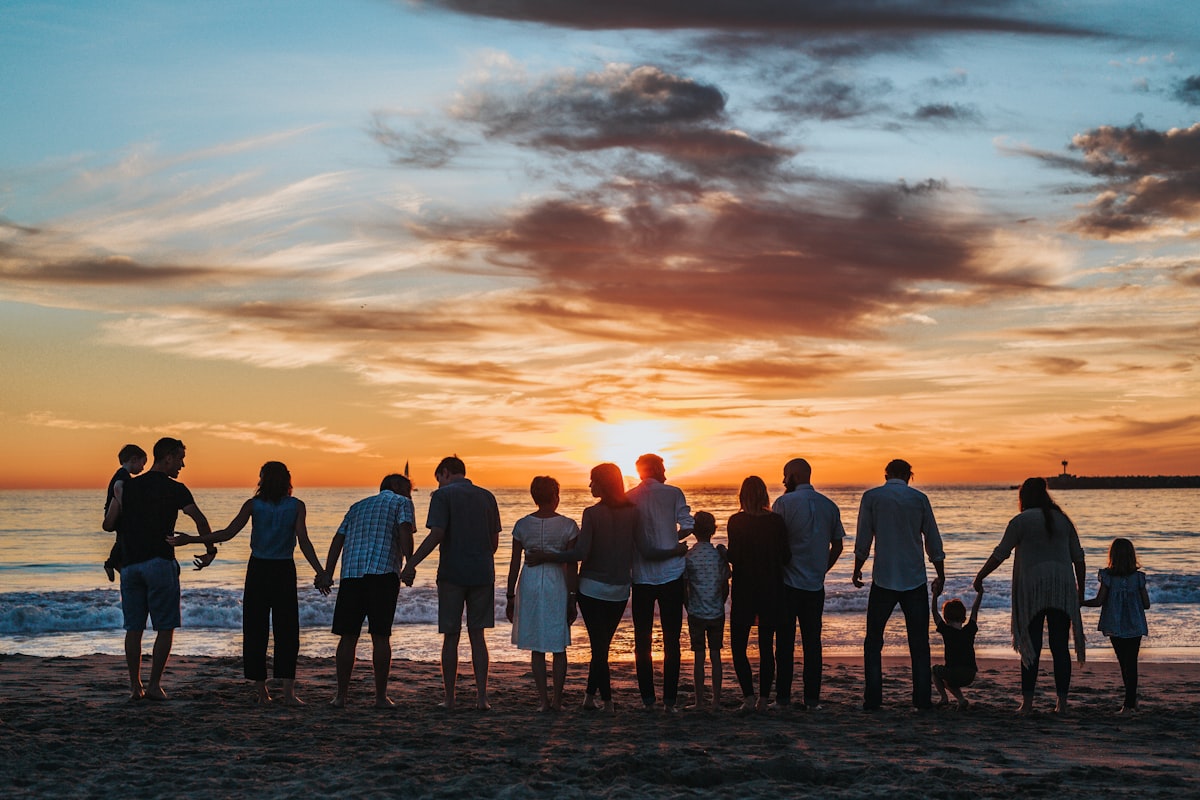
Family photos are high-stakes in a way that other photography isn’t. You’re capturing moments that matter to people, often with uncooperative subjects (kids), limited time, and imperfect conditions. The right camera settings help you work fast and get consistently good results.
The Settings That Matter Most
Aperture: Not Too Wide
It’s tempting to shoot wide open (f/1.8 or f/2) for that creamy background blur. But with groups of people, a shallow depth of field means some family members will be sharp and others will be soft.
For groups of 2-3 people: f/3.5 to f/4 For groups of 4-6 people: f/5.6 For large groups (7+): f/7.1 to f/8
At these apertures, everyone in the group will be in focus as long as they’re roughly the same distance from the camera. If people are standing in multiple rows, use a narrower aperture or line them up at the same distance.
Shutter Speed: Fast Enough for Kids
Kids don’t hold still. Neither do babies. Neither do most adults, honestly.
Minimum shutter speed: 1/200 second for stationary groups, 1/500 for kids who are sitting but fidgety, 1/1000 or faster for running and playing.
If your shutter speed is too slow and you’re getting blur, raise your ISO. A slightly noisy but sharp image is always better than a clean but blurry one.
ISO: Whatever It Takes
Set your aperture for depth of field and your shutter speed for motion. Let ISO fill the gap.
Modern cameras produce clean images up to ISO 1600-3200. Don’t be afraid to use those values for indoor family gatherings, holiday dinners, or overcast outdoor sessions.
Focus Mode: Continuous AF
Switch your camera to continuous autofocus (AF-C on Nikon/Sony, AI Servo on Canon). This tracks moving subjects and continuously adjusts focus. Single AF (AF-S) locks focus when you half-press the shutter — fine for still subjects, but a crawling baby will have moved by the time you fully press.
Use a wide autofocus area or zone focus mode so the camera can track subjects moving across the frame.
Specific Scenarios
Holiday Dinner Table
The lighting is typically warm tungsten or mixed. Set white balance to Tungsten or Auto. Use ISO 1600-3200, aperture f/4-5.6, and try to position yourself where the room’s light source is behind you illuminating the table.
A bounce flash aimed at the ceiling can dramatically improve indoor dinner photos if the room is dark.
Outdoor Family Portrait
Find open shade — under a tree, beside a building, or on the shaded side of a structure. This eliminates squinting and harsh shadows.
Settings: ISO 100-400, f/5.6, shutter speed as needed (usually 1/250 or faster in daylight). If the background is in direct sun and the family is in shade, use fill flash or a reflector to balance the exposure.
Kids Playing
Switch to burst mode and spray. Shoot in 5-10 frame bursts and pick the best expressions later. Use shutter priority mode at 1/1000, let the camera handle aperture and ISO.
Get down to their level. Shooting kids from adult height looks down on them — literally. Kneel or sit to shoot at their eye level for more engaging, intimate images.
The Candid Group Shot
For casual family moments (everyone on the couch, gathered around a birthday cake), use a slightly wider lens and shoot from further back. Include context — the room, the cake, the decorations. These environmental details become more valuable over time.
White Balance Tip
Indoor family photos shot in Auto white balance often look too warm (orange) or too cool (blue) depending on the lighting. If you’re shooting raw, you can fix this in post. If you’re shooting JPEG, take a test shot and adjust white balance until skin tones look natural on your camera’s screen.
The Most Important Setting
Burst mode. Families blink, kids look away, someone always has a weird expression. Take 5-10 shots of every group arrangement and pick the best. The odds of everyone looking good in a single frame drop dramatically with each additional person. Stack the odds with volume.